Aptekarsky Island
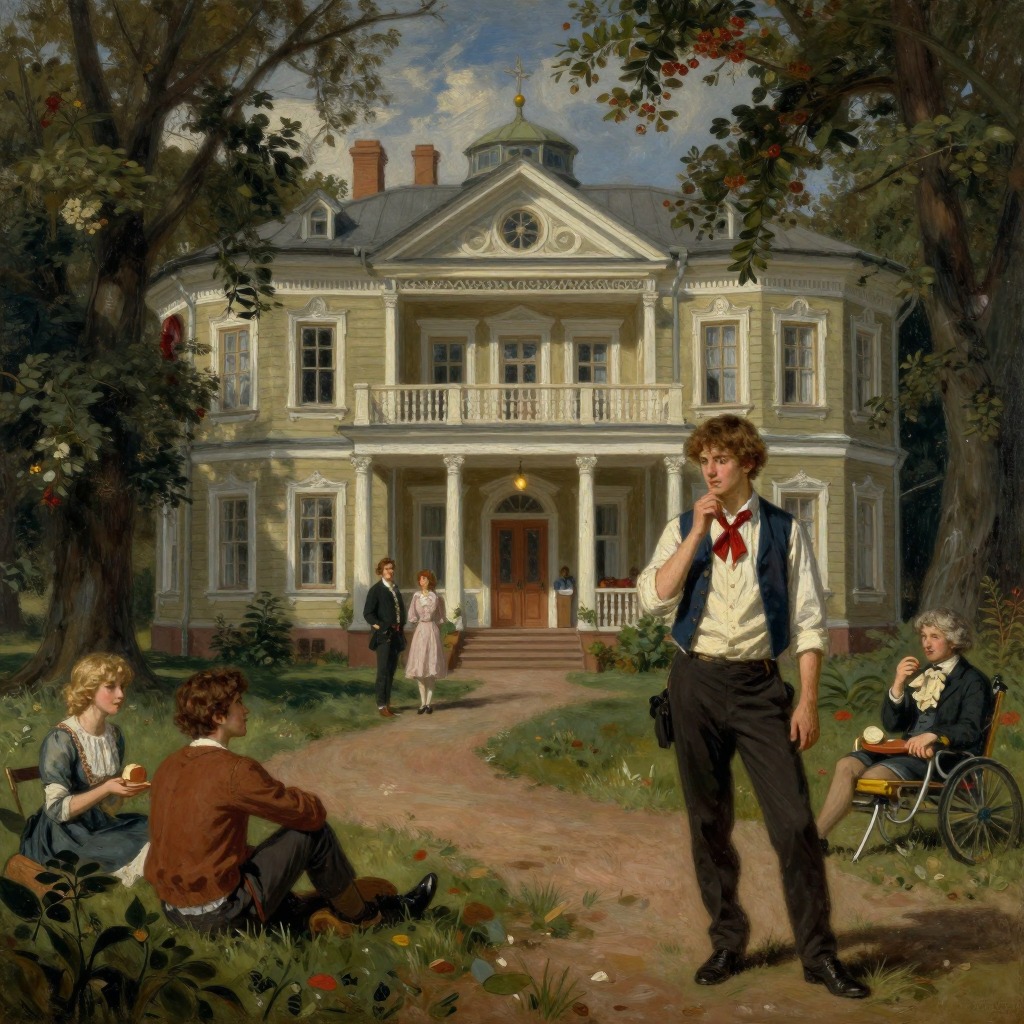
Aptekarsky Island is one of the summer villa destinations in Petersburg whose inhabitants the Dreamer identifies by their studied elegance and fashionable appearance during the annual summer exodus, a phenomenon that deepens his sense of isolation.
Location and Setting
Aptekarsky Island is a summer villa district on the outskirts of Petersburg, part of the constellation of islands and suburban areas to which the city's respectable households migrate each year when the warm weather arrives. The Dreamer, a solitary young man who has lived in Petersburg for nearly eight years without forming any real acquaintances, develops a peculiar sensitivity to this seasonal movement. He observes that the inhabitants of Aptekarsky Island and Kamenny Island are marked by "the studied elegance of their manner, their fashionable summer suits, and the fine carriages in which they drove to town." This contrasts with the more "reasonable and dignified air" of visitors to Pargolovo and places further away, and the "irrepressible gaiety" of trippers to Krestovsky Island. The Dreamer's ability to distinguish a person's summer residence from their mere appearance is a symptom of his intense, almost obsessive attention to the life from which he feels excluded.
The Summer Exodus and the Dreamer's Isolation
The Dreamer's awareness of Aptekarsky Island is inseparable from the broader Petersburg summer exodus that throws him into a state of profound despondency. For three whole days before he identifies the cause of his unease, he wanders the town in dejection, feeling as though everyone is deserting him. The streets that were once familiar—the Nevsky, the Gardens, the embankment—are emptied of the faces he had grown accustomed to seeing at the same time and place all year. He imagines that every respectable gentleman taking a cab is a head of a household heading to the bosom of his family at a summer villa, and that even the flowers bought from street-sellers are destined for country lodgings. The waggons loaded with furniture and the boats crawling along the Neva and Fontanka toward the Black River or the Islands seem multiplied a hundredfold in his eyes, and he feels ashamed, mortified, and sad that he has nowhere to go for the holidays and no reason to go away. He is ready to go with every waggon, but no one invites him; he feels forgotten, as though he were a stranger to them. The very houses he passes seem to speak to him, one announcing a new storey in May, another being redecorated, and a favorite little pink house that is cruelly painted yellow—but these are the only companions his solitary life affords.
Narrative Significance
Aptekarsky Island functions in the narrative not as a place the Dreamer ever visits, but as a symbol of the social world from which he is excluded. His ability to classify summer villa dwellers by their appearance is a form of knowledge that only deepens his loneliness, because it is knowledge without participation. The island belongs to the realm of "real life" that the Dreamer contrasts with his own existence of fantasy and dreams. When he finally escapes the city and walks through the fields and meadows beyond the gates, he feels as though a burden is falling from his soul, and the passers-by give him friendly looks—but this release is temporary. The summer exodus, with Aptekarsky Island as one of its destinations, defines the boundary between the Dreamer's inner world of imagination and the concrete, social life that goes on without him. It is against this backdrop of seasonal abandonment that his encounter with Nastenka on the Canal Embankment becomes so transformative, offering him a brief moment of genuine connection that he will treasure for the rest of his life.